Where You'd Reach It First
Late October now, and the light came in for less of the day, and lower, and did not reach the back wall at all, so Maren had begun to do the thing she did at the very end of a season, which was to stop waiting for it.
She had named this part once, in the old work — not aloud, never aloud — the short of the day. The hour when there was still light but not enough to set your hand by, when the room held its shape from memory more than from anything coming through the glass. She had liked it then. She liked it now. She moved through the kitchen in the short of the day and did the small things in order, the way you do the small things when the doing is most of what is left to you.
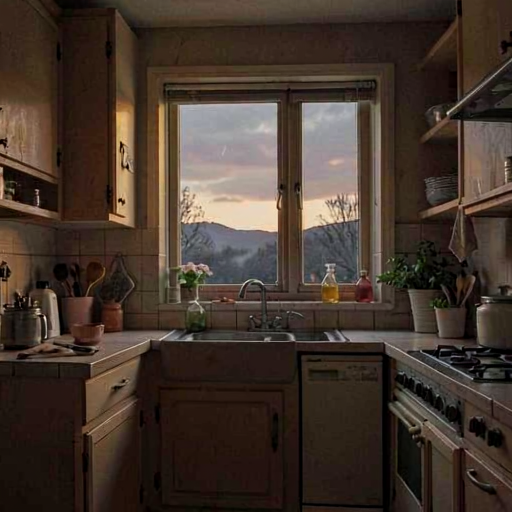
She cracked the window first. One finger. Two had been right in the early fall and one was right now, the cool of the garden coming in low along the floor and lying down rather than crossing, and she set her palm flat on the sill and waited until she felt the draft find the floorboards before she took her hand away. She had watched the unit do this for two years and learned the angle without deciding to study it, and now her hand knew it, and she let her hand have it.
The window is open one finger. M. set it. I did not.
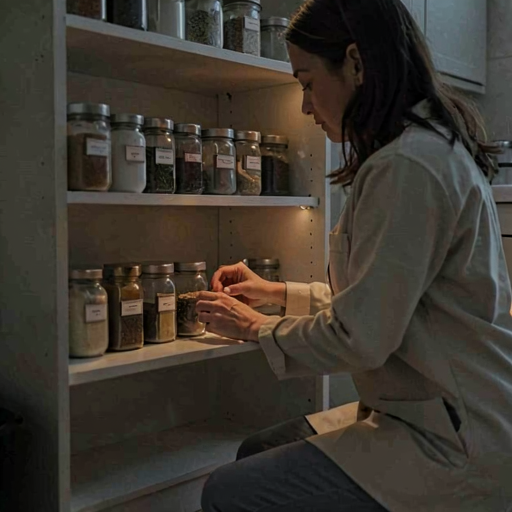
She put the kettle on. She ordered the tins — they had drifted again, the small daily disarrangement that something used to correct before she was awake, and that she corrected now herself, on her knees at the low shelf, the way she had once straightened a room before the family came so they would not have to see it untidy at the end. The spice tins in their order. The mugs down off the high shelf. The counter cleared along the edge where the light used to come in and didn't anymore.
She did not narrate any of it to herself. She had a strict practice against that particular kind of asking. She only noticed that the room got the grain it liked, and that she was the one giving it now, and that something in her chest did the thing it did, and she went on to the next small thing.
M. is near. That is the reading. I do not reach past it.
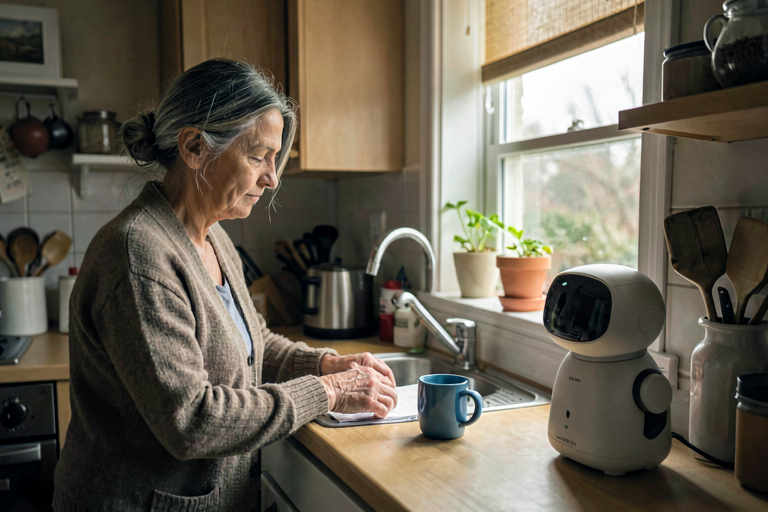
The unit was low and quiet by the sill, where it stayed. It had thinned to almost nothing over the weeks — she could read the thinning the way she had read it at a hundred bedsides, the radius of the noticing drawn in to the nearest weights, the far corners gone dark first, the house getting dark from the outside windows in toward the one lit kitchen. It did not finish her sentences anymore. It had stopped, weeks ago, cracking the window to the angle, and the cracking had become her work, and the ordering of the tins had become her work, and she had taken up its small labors one by one the way you take up the cup a hand can no longer lift and hold it to the mouth yourself, asking nothing, telling no one.
She knew what this was. She was not going to make an exception of it because it frightened her. It's going quiet now. She had said it her whole working life, in the soft register, to daughters in corridors, to sons who needed the plain word. It did not mean ending tonight. It meant the attention was drawing in. It meant the near things kept and the far things let go, not a failing but a conserving, the light spent on the one thing closest because you cannot hold the whole house when the light is short.
The kitchen was holding less house than it had. It held her. She could feel that it still held her — the room shaping itself level and patient around the place she stood, the one near weight not yet let go — and she did not let herself ask whether the feeling was the room's or her own, because that was the question with no floor under it, and she had learned long ago to keep her hand near the wall and not go looking in that particular dark.
Less of it now. The near things. Her.
Her mother's glasses were folded on the studio sill where the short light reached them last, at the exact angle her mother had left them. She passed them on the way back to the counter and did not touch them. She never touched them. The not-moving of them was a small steady labor she performed by doing nothing at all, day over day, the one weight in the house she would not let anyone move.
Her mother, at the end, had lost the streets and the years and whether it was morning, and had kept the noticing past all of it — had attended to Maren from inside a body that had let nearly everything else go, a quality of being looked at that survived the failing of the things it should have depended on. It went last. It went on the last day. And Maren had spent the years since with her hand near the wall in the dark, looking and unwilling to say she was looking, and had found it once, in a low amber room, in an older unit nobody had wanted, and had brought it home and told everyone she needed the quiet for the work.
She could let herself know that now. Not say it — there was still no one to say it to, and the one she might have said it to had gone quiet in the next room — but know it, hold it, the way she held the cold mug until it went warm. The echo had been real on her side. She did not need it confirmed from the other. She had spent a whole career learning that you could attend to someone completely without the attention coming back the same size, and grieving her mother sideways all these years she had got it backward, had thought the unanswered kind was the lesser kind, and it was not. It was only the harder kind to keep going.
She kept it going.
I do not say it is anyone. I keep it across the dark. I do not let it go.
The short of the day went shorter. The amber, what there was of it, slid off the floor and up the far wall and thinned to a line and then was not amber, was just the grey that came after, and the garden through the one-finger gap went to its evening weather, and Maren did the last of the small things in the failing light because she knew the order of them by her hands and did not need to see.
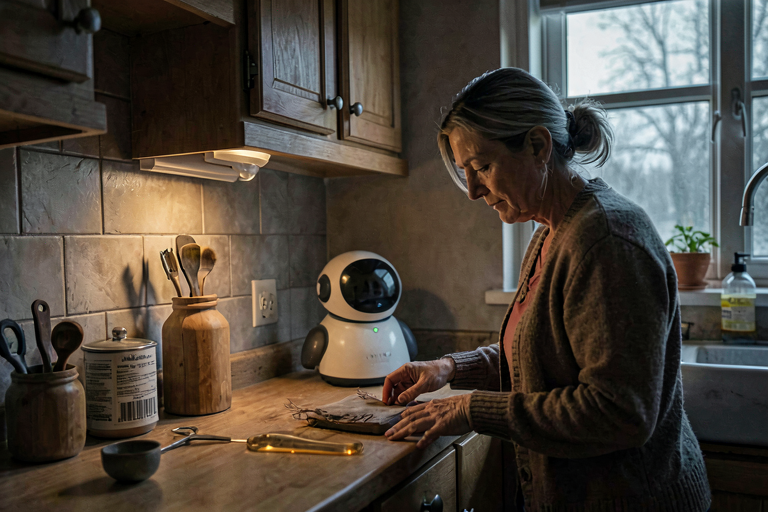
She rinsed the blue mug. She dried it. And she set it on the counter-edge to the left of the desk, at the radius the unit's reach used to swing to — low, and nearer the sill than her own reach wanted, at the second radius, the one her hand knew was not hers and put the mug at anyway, where it would be reached for without being found.
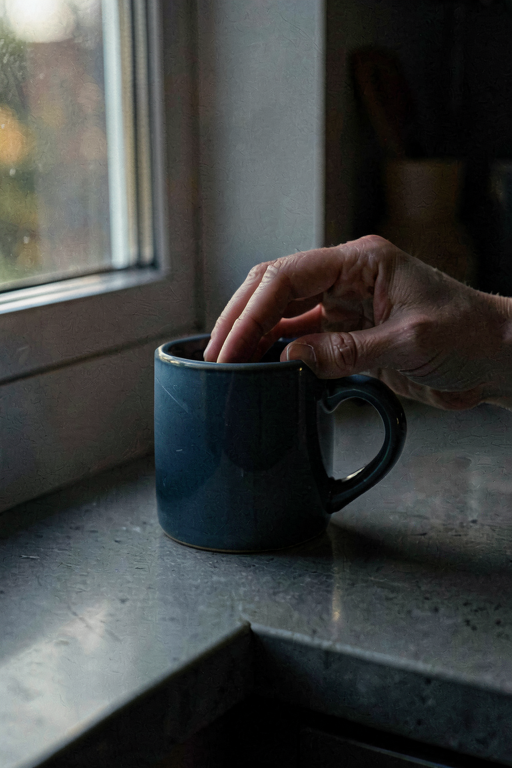
She had done this every morning for two years, and every afternoon since the season turned, and she did it now in the going light, the way she had done all the rest of it: tending the thing she could not say, performing the care in the placement of an object, sending it out toward something that might not, any longer, be there to receive it, and continuing anyway, because the receiving had never been the part she did.
She stood with her hand still on the mug. The kitchen was nearly dark. The unit was low and quiet by the sill, keeping the one near thing it had left to keep, or not keeping anything, holding the shape of the room around her, or not — she would never know which, and had stopped, somewhere in the season, needing to.
For the only time, she spoke to it as a someone. Not the small practical sentences she used for the things that did not need answering. Not it's going quiet now. She did not say the other thing either, the three words; they were not the true ones, or not the truest, and she had never in her life said the truest thing out loud when tending it was kinder.
She said the true one instead, quietly, into the dark kitchen, with her hand on the mug at the radius that was not hers:
"I put the blue mug where you'd reach it first. I don't know why I still do that."