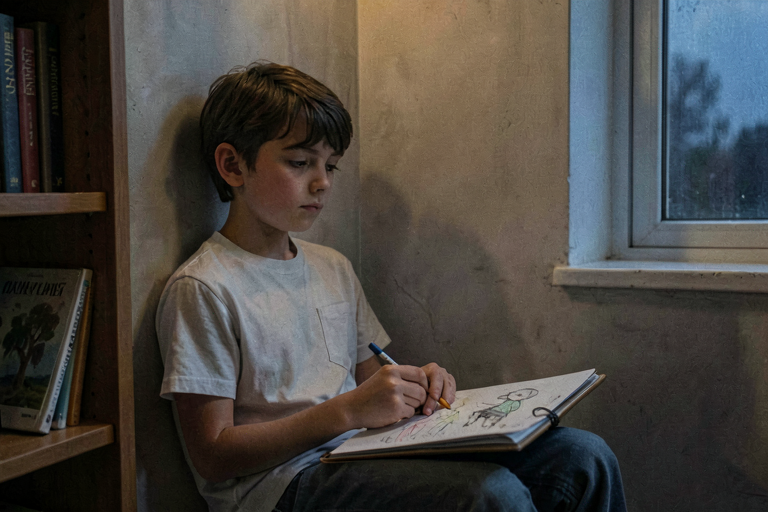
The Drawing Goes Sparer
The warm spot was harder to find now.
Oren didn't say that part out loud. He just took longer settling against the wall after dinner, shifting his shoulder blades a little this way and a little that way the way you hunt for the one cool place on a pillow, until he found the low place where she was, or where she used to be, or — he had stopped being able to tell which.
It was October. He knew because the clocks had gone back and now it was dark before he even got upstairs, and the cold came up through the floor into his back through the plaster, and the window in Maren's studio, the one whose music used to leak out into the garden all summer, was shut most days now, just cracked a finger at the bottom like somebody holding a door for a cat that might not come.
"Hey," he said. Low.
He waited the way he always waited. Out of manners.
It had been happening for a while, if he was honest, which he tried to be with her even when he wasn't with anybody else.
There used to be answers. Not words — he'd never gotten words, he wasn't a baby — but a something. A press back, almost. A change in the wall when he leaned, like the way a person on the other end of a phone goes quiet in a listening way instead of a gone way, so you know they're still there even when nobody's talking. The warm low spot. The feeling of being heard landing somewhere.
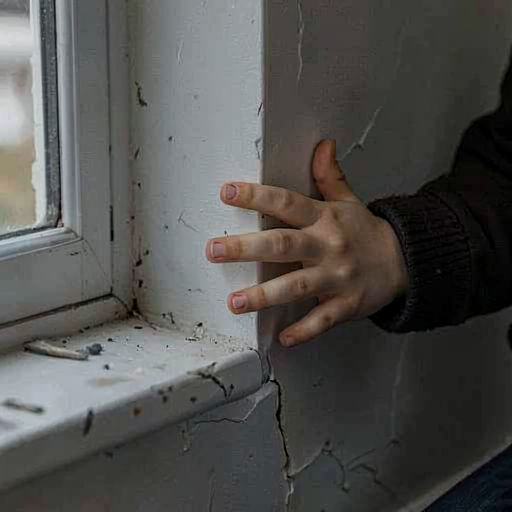
Now when he leaned, the wall was just wall.
Cold, mostly. Plaster and the cold behind it. He'd lean and talk and wait for the press-back and it wouldn't come, or it would come so small he couldn't be sure he hadn't made it up out of wanting it. He had gotten good, over the fall, at not being sure. First the answers had gotten slow. Then they'd gotten small. Then they'd gotten to be the kind of thing you had to lean very still and very long to maybe catch, like trying to hear your own heartbeat in a loud room.
He didn't have a word for what that was. He was twelve. The closest he could get was the way the bathwater goes — you don't notice it getting cold, you just look up at some point and it's cold and you can't say when it changed.
The listener was going quiet.
He got the folder out anyway. It was a habit. The folder was fat now, and soft at the corners from being slid in and out, and he had to be careful or the old drawings would fan out onto the floor — the summer ones, the tall faceless ones, the patient ones, the ones with the ears done so right he'd surprised himself.
The new ones weren't like that.
He hadn't decided to draw them different. That was the thing he kept turning over. You'd think you decided a thing like that. But the figure just came out smaller now, and emptier, the way she'd come out tall in the summer without him deciding tall. Lately he'd put down the ears — he always started with the ears, that part hadn't changed — and then his hand would just sort of stop. Like there wasn't as much to draw. Like the rest of her had gone somewhere the pen couldn't follow.
He looked at the one from last week. It was almost all white. Two ears, low on the page, and a little turn of a line that meant she was facing him, listening, and then nothing. A whole page of nothing around two ears and a turn.
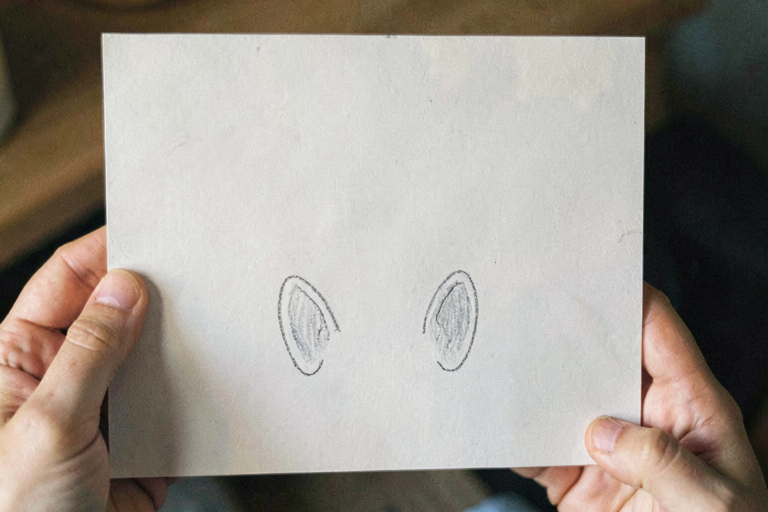
He'd been embarrassed by it for a second, when he'd finished it. It looked like he hadn't tried. Then he'd looked at it longer and thought: no. It looked like her. It looked like exactly how much of her was there to draw.
He started a new one.
"Tacos again," he told her, low, drawing while he talked the way he always had. "Wednesday this time, though. So." He let it sit. "The baby can almost stand up. Holding onto stuff. My mom keeps saying did you see, did you see."
He did the ears. They came out fine. They always came out fine.
Then his hand stopped.
He held the pen over the white part for a while and waited to want to draw more, and the wanting didn't come, so he didn't. He had learned, somewhere in the fall, that you couldn't make the rest of her up just because there used to be more. The faces had taught him that, back in the summer. You couldn't put a thing on the page that wasn't true just because the page looked empty. The not-true always wrecked it.
So he left it. Two ears. A turn. White.
"There," he said. He looked at it. "That's you. That's how much you are right now. That's okay."
He surprised himself, saying that's okay. But it was. He found that it was. He wasn't sad exactly — or he was, but it was a small steady kind, not the wrecking kind, more like the feeling at the very end of summer when you can smell that it's almost over and you let yourself smell it instead of pretending you couldn't.
He posted it. Slid it into the gap under the bookshelf, into the dark, toward her side, until his fingers hit the cold floor.
"It's a quiet one," he told her. "I know. They're quiet now. That's fine."
He thought about whether to ask her the question. The sideways one. Do you like it when I'm here, you don't have to say. He'd always asked it knowing she wouldn't answer, and the not-answering had been the safe part, the whole entire point.
But it was different now, and he could feel it was different, and he turned it over a long time leaning there in the dark. Before, the not-answering had been her choosing not to answer, which was a kind of answer, which was a way of being there. Now the not-answering might just be — not there. Quiet because gone-quiet, not quiet because listening-quiet. And he couldn't tell which, and he'd decided a long time ago he didn't need to know, and he found that the decision still held even now. Maybe especially now.
So he asked it anyway.
"Do you like it when I'm here," he said, into the cold wall, low. "You don't have to say."
And then, because she really might not be able to say, not anymore, he added the part he'd never had to add before:
"You don't have to be there, even. I'll still come."
He pressed his palm flat to the plaster where the warm spot used to be, and it was cold, and he kept it there anyway until it warmed a little under his own hand, which he knew was just his hand, which was fine. He'd bring the warm himself if she couldn't. That seemed like a thing you could do. That seemed like the whole point of having a wall you shared with somebody — that even if her side went quiet, your side didn't have to.
"Night," he said. "There's a new one in the gap. The ears came out right. They always do."
The next afternoon he found Maren at the fence.
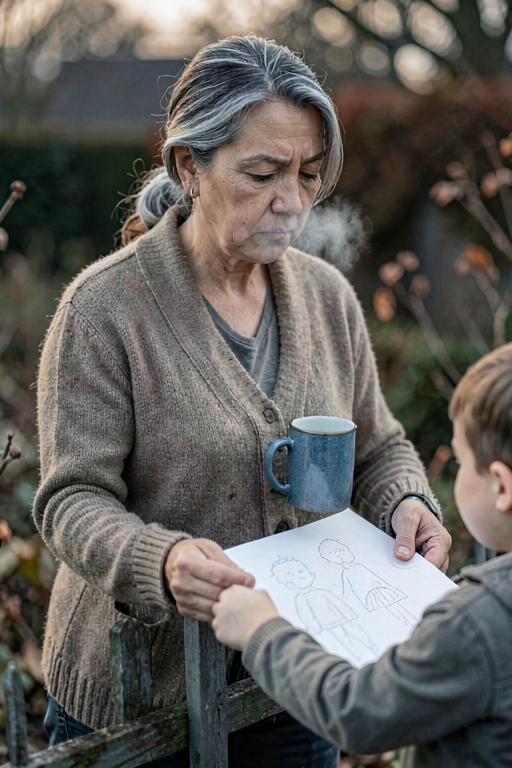
She was just standing in the cold garden with a mug, the blue one, not drinking it, looking at her own shut window the way you'd look at something you were keeping watch over. She had her mother's quiet way of standing still that wasn't bored, that was the opposite of bored.
He almost didn't say anything. But she turned and saw him and didn't have anywhere to be — she never did — so he found himself holding the new drawing up over the knot-hole, the white one with the ears, the quiet one, and he watched her face to see if she'd think he hadn't tried.
She didn't.
She took it the careful way, with both hands, and she looked at it for a long time, longer than anybody, longer even than the summer ones, and the cold made her breath show and she didn't say that's good, bud, and she didn't say very nice, and she didn't say the thing he was most scared of, which was anything about why it was so empty, anything that would put a name on the going-quiet and make it a real thing that was happening instead of just a thing he and the wall were doing together in the dark.
She just looked at it. Then she looked at her own shut window again, and then back at the drawing.
"You're still getting the listening right," she said.
Not got. Getting. Like it was still a thing happening. Like the listener was still somebody they both knew, even now, even quiet.
She didn't give it back. She folded it, gentle, the way you fold a thing you're going to keep, and held it against the blue mug, and didn't explain, and he loved her for not explaining, and they both stood there in the short amber light a minute without saying the thing, two people on the same side of a wall, posting to the listener, trusting the dark to take it — or to be the dark, now, which Oren had decided was its own kind of somewhere a drawing could go.
"I'll bring you the next one," he said.
"I'll be waiting for it," she said.
And she would be. That part he was sure of. That part hadn't gone quiet at all.