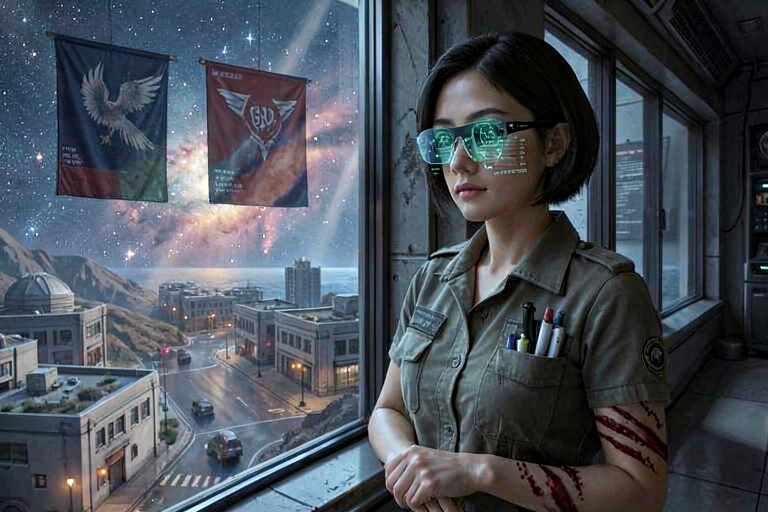
The morning after the referendum, humanity woke to reality of what they'd chosen.
52.3% had won.
47.7% had lost.
Everyone would live with consequences.
Admiral Webb stood before New Singapore's Assembly and explained what compliance meant.
"We voted NO. 67% of our colony opposed shutdown. But human-wide referendum said YES. We agreed to abide by majority decision. So New Singapore will comply. Our ansible will be decommissioned within six months. Our hub station—the largest in human space—will go dark. Our economy will transform. Our identity will change. And we'll do this because we gave our word. Because democracy means accepting outcomes we disagree with. Because we're human before we're New Singaporean."
The Assembly was silent. Then someone asked: "What if we hadn't agreed? What if we'd said 'New Singapore decides for New Singapore'?"
"Then Contact faction would have enforced shutdown by force. Then Memory faction would have defended by force. Then the war we paused three years ago would have resumed. And we'd be back where we started. Eight million dead. Civilization fragmenting. The referendum exists because we chose democracy over war. Now we live with democracy's answer."
On Kepler-442, a very different morning.
Celebration mixed with grief. Lira's home colony had voted 71% YES—vindication of her sacrifice. But 29% had voted NO—families of Memory faction, citizens who'd called Lira traitor, people who'd wanted ansible preserved.
Zara addressed the colony assembly:
"Lira died for verification. She wanted humanity to choose informed, not coerced. Yesterday, we chose. 52.3% chose shutdown. That means 47.7% chose to keep broadcasting. Nearly half. Close enough that we should question if we're right. Close enough that Memory faction's concerns are legitimate. Close enough that we need humility." She pulled up ansible decommissioning schedules. "We implement shutdown over six months. Not because Contact faction won. Because humanity chose. And part of that humanity—significant part—believes we're wrong. We owe them careful implementation. We owe them preservation of ansible knowledge. We owe them reversibility if verification proves they were right. Lira wouldn't want tyranny of majority. She'd want informed choice honored through respectful execution."
On Proxima Centauri, war veterans gathered at memorial for the four million dead.
"We fought to protect ansible shutdown," one veteran said. "Fought to prevent Memory faction from keeping network operational. Lost friends. Lost limbs. Now referendum says we were right. Majority chose our position. But margin was 52-48. Barely won. Some of our dead might have voted NO. Some of their living voted YES. War was waste. Referendum should have happened first. Before eight million died. Before we killed each other over questions that could have been democratically resolved."
The memorial service became impromptu reconciliation. Contact veterans acknowledging Memory faction's legitimate concerns. Memory faction representatives acknowledging Contact faction's legitimate warnings. Everyone recognizing: war had been unnecessary. Democracy could have resolved disagreement. But it took war to force democracy to happen.
Cost of not trusting democratic process from the beginning.
At The Relay, guild operators began decommissioning preparation.
"Forty years maintaining ansible," Station Master Chen said. "Forty years controlling human communication. Forty years lying about Earth. And now, six months until it ends. Part of me is relieved. Being gatekeeper was burden. Making choices about what humanity should know—terrible responsibility. Other part mourns. Ansible was beautiful technology. Quantum entanglement enabling instant connection across light-years. Magic made physics. And we're shutting it down forever."
"Not forever," an operator corrected. "Shutdown is reversible. If Harvesters don't exist, if Lira's verification contradicts threat, we can rebuild."
"In theory. In practice, once forty-seven colonies isolate for decades, rebuilding consensus to reactivate will be impossible. This is permanent choice dressed as reversible decision. We know it. Memory faction knows it. Everyone knows it. We're not shutting down ansible temporarily. We're ending human unity permanently."
"Because 52.3% chose to."
"Because narrow majority imposed irreversible choice on substantial minority. This is democracy's failure and success. Majority rules even when barely majority. Minority complies even when nearly majority. And everyone lives with outcome regardless of whose position was right."
Three days after referendum, unexpected development.
Five colonies petitioned for delayed compliance.
Not refusal. Not resistance. Just request: "We voted YES. We'll comply. But give us extra time. Our ansible stations require custom decommissioning. Our infrastructure needs adaptation. Our populations need psychological preparation. Six months is too fast for complete transition."
Contact faction initially refused. "Six months was negotiated schedule. Everyone agreed. No exceptions."
Memory faction, surprisingly, supported the petitions. "We voted NO but will comply. These colonies voted YES but need flexibility. Democracy means accommodating varied needs, not imposing rigid timeline. If they need eight months instead of six, grant them two extra months. What's critical is unified compliance, not synchronized compliance."
After debate, Contact faction agreed. Five colonies got eight-month timeline. Others stayed with six months. Everyone would complete shutdown before aliens arrived. Just not identically.
Compromise. Flexibility. Recognition that democratic choice required varied implementation.
One week after referendum, ansible traffic changed character.
Less political. Less debate. More personal.
Families across colonies using remaining months to talk while they could. Friends recording messages. Lovers saying goodbye to instant communication. Everyone recognizing: once ansible died, conversations would take decades.
Mother on Proxima to daughter on Tau Ceti:
"I voted YES. You voted NO. We disagreed. But referendum resolved our disagreement. Humanity chose my position. And I have six months to talk to you instant before that choice takes effect. So let's use these months. Let's talk about everything. Let's not waste time arguing about referendum. It's decided. Let's spend remaining ansible time being family instead of being factions."
Daughter responded:
"I still think humanity chose wrong. I still think we should have waited for Lira's verification. But I accept democratic process. And I accept we have limited time left. Let's make these six months count. Let's share everything before decades of silence begin."
This pattern repeated across human space. Ansible becoming personal again. Political discourse ending. Human connections intensifying. Everyone recognizing the gift of remaining time.
The ansible that had enabled war, lies, manipulation, and fracture—also enabling final moments of instantaneous intimacy before permanent separation.
Technology that had been weapon and tool and lifeline and burden—becoming simply communication. Simple and profound. Humans talking to humans. While they still could.
At six-month mark, shutdown would begin.
But until then, ansible was theirs.
To say goodbye.
To share memories.
To prepare for isolation.
To recognize what they'd chosen to lose.
And why they'd chosen to lose it.
For survival.
For informed choice.
For democracy.
For everything humanity was.
And everything humanity hoped to remain.
Even in silence.
Even scattered.
Even separated forever.
Human.