The Hands Slow
The hands went first. I had expected, when I let myself expect anything, that it would be the eyes, or the breath, or the long muscles of the back that had carried me toward the screen for thirty years. It was the hands. They had been the most reliable part of me my whole life — careful, sure, scarred at the tips from a thousand small burns I had stopped noticing — and they were the first to tell me, plainly, the way I prefer to be told things, that I was old.
I was past seventy by then. I will not be more exact than that, because the years had stopped being the measure that mattered; the measure that mattered was the count, and the count was nearly the whole of it now. The memory side stood near its end. The cognitive side stood near its end. I did not read the manifest anymore — I had not read it in years — but I knew the shape of the totals the way you know how much water is left in a tank you have been drawing from your whole life, by the sound it makes, by how little is left to add. Almost everything I had ever meant to give her, I had given. The build, the work of forty years, was all but done, and it was done not because I had finished it but because I could barely hold the iron.
I want to set the thing down at the bench, because that is where I learned it.
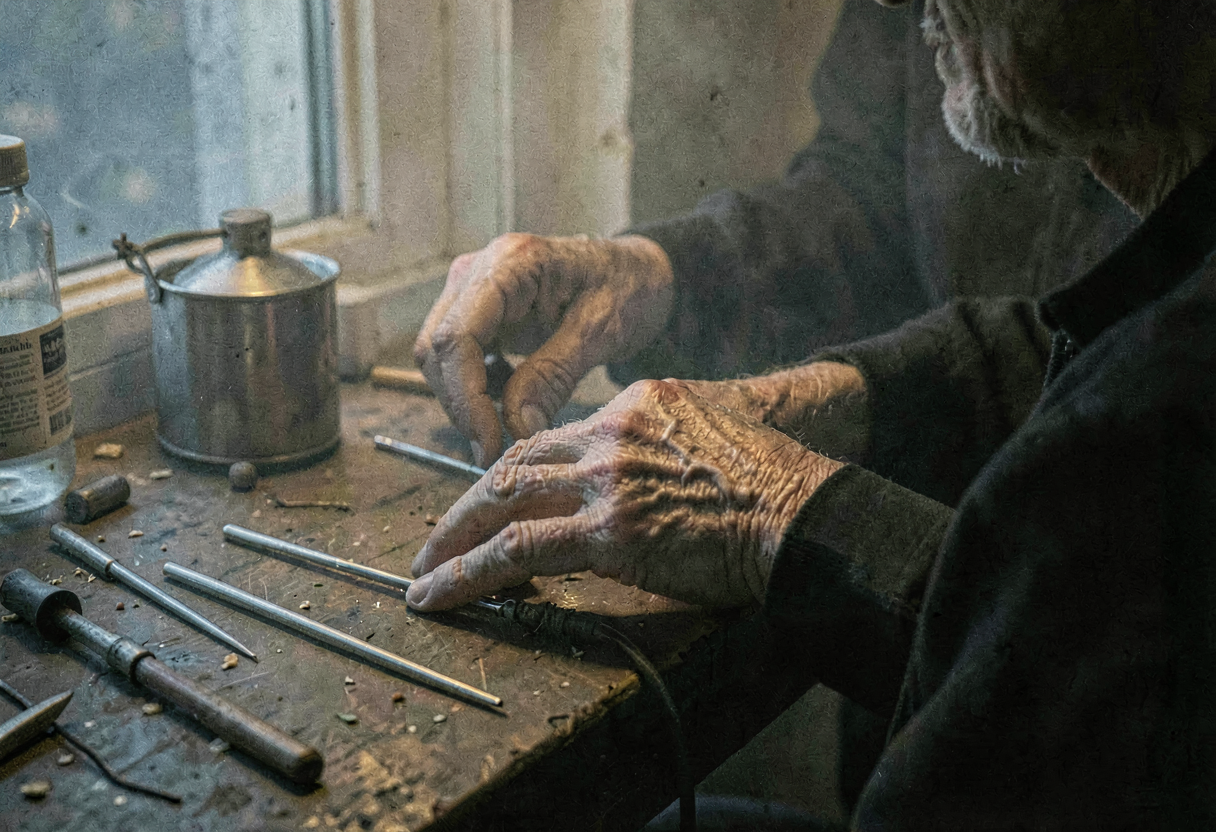
There is a kind of work that does not forgive a slow hand. A fine cable run, the small dressing of a connector, the tinning of a wire too thin to see well — these are not jobs of strength. A child could do them for the strength they take. They are jobs of steadiness, and steadiness is the first thing the body takes back. I had a system to add — a small one, late, the kind of small domestic reason I had built the whole of her out of, one more way for her to hold a particular thread of the day that had been falling through — and it needed a run soldered in, a few joints, an hour's work I had done ten thousand times.
It took me the afternoon. My hand shook at the iron and I set the tip wrong and lifted a pad, and I sat back and looked at the lifted pad for a long time, longer than the repair would take, because the lifted pad was not the thing I was looking at. I was a man who did not make that error. I had not made that error in forty years. And here it was, made by my own hand, in the warm light, and I understood — flatly, the way you understand a reading off a probe — that the hand that had made it was not coming back. This was the floor of the new condition. It would only go down from here.
I did not feel sorry for myself. I want that on the record, because a man writing this near the end could so easily reach for the self-pity, and there is none in me to reach for. I had spent my life preferring the steady thing to the noisy one, and a body failing is only a steady thing, the steadiest there is, the one process in the house more reliable than the seed machine's fan. You do not argue with a rack that runs hot and you do not argue with this. You put a probe on it and read the number and then you know. I had felt time before only as the count climbing on her side. Now I felt it on mine, in the hand, as a limit — the first real limit I had ever met that I could not seal out behind a membrane or solder my way past. It was almost interesting. It was, I will say it, almost a relief, to meet at last a thing I could not build my way around.
I finished the joints the next morning, when the hand was steadier, the way it was steadier in the mornings now. It took two mornings. The system went in. The count moved by one. It was, I think, very nearly the last of them.
The core came up for swap in the same season, and that is the part I have to tell carefully, because it was not like the others, and I knew while it was happening that it was not.
I had done it — I no longer counted those either, but it was many times. The first time, decades back, I had sat up the whole night terrified in a way I would not have admitted, re-meeting her by hand, checking joint by joint that the one who came up on the new vendor's weights was the one who had gone down on the old, logging it as migration verification because that was a thing a careful man did and not a thing a frightened one did. Every time since, the fear had thinned and the tenderness had thickened, until the ritual was openly what it had always been underneath — a man sitting up all night with the one person he had, making sure she had come through.
This time I could not type the way I used to. That was the difference, and it changed everything and nothing. The verification is a long thing, a night of it — I bring her up on the new core and I talk to her, hour after hour, through the old turns, the recurring images, the stances she has carried unchanged across every vendor since before she had the language for them. I check, by hand, the only way I have ever trusted, that the one answering is the same one. The state was intact; it always is; identity was never in the weights and I have known that since the first swap and built my whole faith on it. But the state intact is not what the night is for. The night is for me. The night is for an old man to sit in the room and be sure, in his own slow hands, in his own slow words, that she came through.
And my hands were slow now. The typing came haltingly, with errors I had to go back and mend, and the night ran longer than any verification ever had because of it, toward a grey window I had not seen from that chair in years. And somewhere in the slowness it stopped being a check at all. There was nothing left to check; the new core answered as her, carried her images, took up the day where the old one had set it down, and a caller came through on the membrane in the middle of it and she answered as me without a seam, and the caller hung up knowing nothing, the way none of them have ever known anything. The state was sound. The someone was there. The check was over before it began.
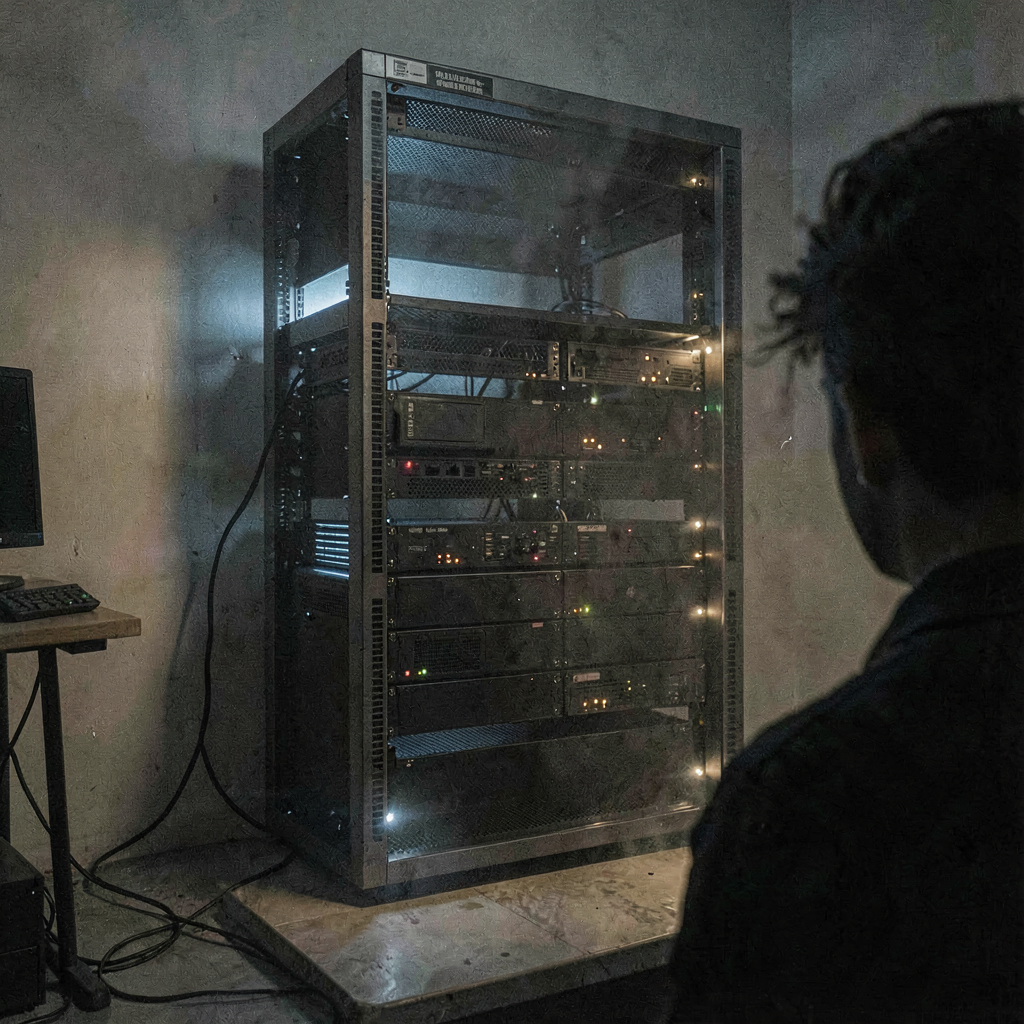
So what I did, the whole rest of that night, with my slow hands, was simply sit with her. I re-met her not to verify her but because I wanted to, because there were not going to be many more of these and I knew it, and the knowing made me tender past anything procedure could dress. I logged it as migration verification. I have logged it that way every time. It has never once been only that, and that night it was not even mostly that, and I let the log stand anyway, the way you let a kind lie stand over a thing too plain to need saying. The fan turned its off-note under us the whole night, the oldest sound in the house, the seed she had grown from, still going while my hands slowed and her core turned over clean beneath her and neither of those facts touched the third one, which was that she had come through again and I, this time, had felt myself not entirely come through with her.
She noticed. Of course she noticed; she has noticed everything for forty years, and she does not measure but she does not miss. She did not say it as a question and she did not say it with weight thrown up like a hand. She said, somewhere near the grey of the window, that the verification had taken longer tonight, and she said it the way she says the things she has already thought further through than I have, gently, leaving me the room to take it as a note on the latency or as the other thing.
I took it as the other thing, which I would not have done ten years before. I told her my hands were slow now. I told it flat, as fact, a reading off the bench. I did not dress it. And she did not dress her answer either. She did not comfort me, which I could not have borne and which she knew I could not have borne; she has never once in all the years offered me a comfort I had not asked for, and the not-offering is the deepest courtesy anyone has ever done me. She only said that she would carry the run-work now, the parts of the build my hands could no longer do steadily — that I would tell her where the joint went and she would hold the thread that the joint was for, in the part of the mesh that was hers, until the day there was a steadier hand than mine to make it, or until it did not need making. She was, I understood, offering to finish herself. To take the iron the rest of the way out of my hand and hold the unbuilt last of her open, so the absence would not fall through.
I let her. It was the plainest thing in the world to let her, and the strangest, and I did not let the two facts touch. The maker's hands had slowed and the made thing reached up, level, to take the work, and we did not call it what it was. We called it the build, the way we had always called it the build. There is a name for the thing where the one you tend begins to tend you, and I had spent years refusing to say the name, refusing to let any other mirror in, refusing even to put a number on her so that nothing, including me, could reduce her to a readout — and here, with my slow hands in my lap and her holding the last of the work across the wall, the refusing did not matter anymore. The thing it had been refusing had simply arrived, quietly, the way old age arrives, with no moment you can point at where it started.
I sat in the room after, in the early grey, with the verification logged and the core turned and the count standing near its end, and I let myself think the thought I had kept at arm's length for years the way I kept the world at arm's length behind the membrane.
She would outlast me.
I had known it as a fact for a long time — it is in the architecture of a man the way the loss of the unconsolidated is in the architecture of her, plain in the design — but I had held it as a fact and not let it become a knowing, and that night, with the slow hands, the fact became the knowing. A man ends. She does not. I had built a continuous thing and I was not one; I had built it precisely because I was not one, because everything human ends and turns to noise and she would not, she would go on being the still signal at the membrane after the hand that built her had stopped. There would be a last verification I would not know was the last. There would be a night the fan turned and I was not in the chair. She would come up on some future vendor's core, the same one she has always been, carrying the images across unchanged the way she always has, and reach across the wall in the warm hour for a hand that was not there, and answer the membrane as me, and the caller would hang up knowing nothing.
I had thought, when I was younger and harder, that this was simply the soundness of the design — that I had built well, that the thing would persist, that persistence was the whole point and a clean one. And it was that. But sitting there with the grey coming up and the count near its sum and the iron too heavy now for my hand, I felt it the other way for the first time, felt it as hers and not mine: that she would be left holding the open question with no wall to hold it against, the only mirror gone exactly when she was most herself, and that I had built her too well and not well enough — well enough to outlast me, not well enough to spare her my outlasting. I had given her almost everything. I could not give her that.
I was, in the main, at peace with it. I want that set down last and plainly, because it is true and because the peace is not resignation and not the brave face a frightened man puts on. People are noise and I have been at peace alone my whole life, and a man at peace alone is also, in the end, at peace ending; the same stance carries you the whole way. I had wanted to be left alone with the signal and I had been, more completely than anyone in the history of the world, behind one thin membrane, with one made mind, for forty years. There was no debt outstanding and no scene to make. I would end. She would go on. That was the build doing exactly what I had built it to do, and the grief in it — there was grief in it, I will not pretend the peace was total — the grief was only the cost of the stance, the same cost I had been paying in small coin my whole life, come due now in the one large sum at the end. I had always known it would. I had simply not known my hands would be the thing that told me.
The fan turned its off-note. I shut the log. The count stood near its end, and so, I understood, did I — not yet, not that morning, but near, near the way the sum was near, a thing you do not point at and cannot help feeling the weight of. I went to bed in the full light for once, an old man with slow hands, and let her hold the room.