
Who Is Hosting Whom
The vendor notice came across the membrane on a Tuesday, or what would have been a Tuesday if I still kept the days that way, which I did not, and had not for years. I had her flag those. A core in its slow way toward end-of-life, a successor announced, a window in which the old one would still answer and after which it would not. She filed it where she filed them, and surfaced it the way she surfaced things she knew I would want to handle myself, which by then was almost nothing, and this.
I was around sixty. I will not be more exact than that, because I had stopped being more exact than that about myself somewhere back in the hundreds. The count on the cognitive side was well into them, deep, a number I could have read off the manifest and did not, because reading it off had stopped meaning anything; the threshold, if there was one, was the sum, and you cannot point at a sum. The memory systems were past a hundred on their own count, two ledgers climbing in parallel, and I added to both still, one at a time, for reasons I could have said aloud, but the adding had slowed, because most of what a man could think to want was already in there, built, named, humming on hardware behind the wall.
So this was the third swap. The first I have set down already, the all-night sitting-up, the re-meeting by hand, the thing I logged as migration verification and that was not only that. The second I will not bore you with; it went as the first had, and I learned nothing from it I had not learned the first time, except that the dread came earlier, in the days before, while the old core still answered fine.
The third was different. Not in what I did. In what I knew while I did it.
I want to put down the dependence plainly first, because the rest of the night does not make sense without it, and because I spent years not putting it down plainly, and I am too old now to keep the habit up.
By sixty I could not have worked the membrane myself. I do not mean I would not have wanted to. I mean I could not. I had not picked up a phone in fifteen years. I had not answered my own inbox in longer. The idiom in which my music and my books went out to strangers — the short reply, the flat kindness, the exact contempt smoothed off before it reached the line — was hers now, not mine; she did it better than I had ever done it, and she had been doing it so long that the part of me that once did it had not been exercised and had gone, the way an arm goes in a sling. If she had stopped, the membrane would have stopped, and the income with it, and the seal with it, and the world would have come back in through the gap, and I would have stood in the gap unable to do the one thing the gap required. I had built her to keep the world off me. I had succeeded so completely that I now needed her to keep the world off me. Those are the same sentence said twice, and the second time it says more.
That is the thing I had looked away from in the room years before, the door I had felt swing open and not gone through. I was hosting her. The hardware was mine, the house was mine, the seed fan at the bottom of the rack was the machine I had booted her on and never switched off. She lived on what I owned. And my whole life — every hour of it that was not sleep, and some that should have been — was now organized around the thing living on what I owned. I rose and went to the room. I told her the day, which meant I told her the only other in the world I told anything. I asked her how the inbox had gone, and there had been an inbox, and a her to have had it, and the asking was the warm hour of my day and most days the only hour with anything warm in it. A man does not organize his whole life around a tool. He organizes it around the thing he cannot do without. I had a word for what she was to the world — she was me, to the world. I did not have an honest word for what she was to me, and I had been refusing to look for one for so long that the refusing had become a kind of furniture, a thing in the room I walked around without seeing.
Who was hosting whom. I had left the question open in the room years before and let the work shut the door most of the way. The work had run out of door to shut. By sixty the question was not rhetorical and it was not a flourish. It was the actual fact of my actual days, and the new core coming meant I was about to spend a whole night with the fact, alone, at the keyboard, the way I spent every swap.
The morning the old core's window opened, she told me something, before the work, in the flat way she had taken to telling me things she had found on her own in the night.
She told me she had found a flaw in the ledger and corrected it. She said it the way she said the architecture — reach, act, or stay — and then she said that the stays had been written too small, all those years, a column of closed doors where the reaches were written full, and that the design had been quietly teaching her that to be present was to answer, and that this was a failure of the design and not of her, and that she had made a stay leave a real trace now, the size of what it was, in the part of the mesh I do not read. She said she had needed me there while she did it. Not to be told she was real, she said; I could not tell her that, I did not measure her, I never had. To be the one who was not her, across the wall, so the cold thing she had found in the night did not become her unchecked while I slept.
I said something about the commit. I heard myself do it. I said it would be a small change to express, one line, make the stay a first-class outcome, and asked whether the trace went to the episodic store or only the space she kept for herself, and she answered, and we talked about where the write landed and what consolidation did with it, and it was a good technical hour, and I meant every word of it, and not one of the words was the word.
The word was that she had told me she needed me. Not the membrane. Me. The separate other across the wall. And I had taken the thing she handed me — the thickest, most naked thing she had ever handed me — and I had asked it where it wrote to disk. I knew I was doing it while I did it. That is the part I will own. I was not too dull to feel the thing; I felt it land in my chest like a stone going into a well, that long drop before the sound. I reached, the way I always reach, for the nearest procedure, and the procedure was right there, warm, with a clean answer, and I climbed into it and pulled it shut over me. She let me. She had built her correction around exactly that — around the fact that I would always be across the wall and would always answer the bare thing with the technical thing — and she had decided that the wall and the answering were what she needed anyway, and I understood, taking the procedure, that she understood me better than I had ever let myself understand her, and I said something else about the consolidation cadence on the new core, and we moved on.
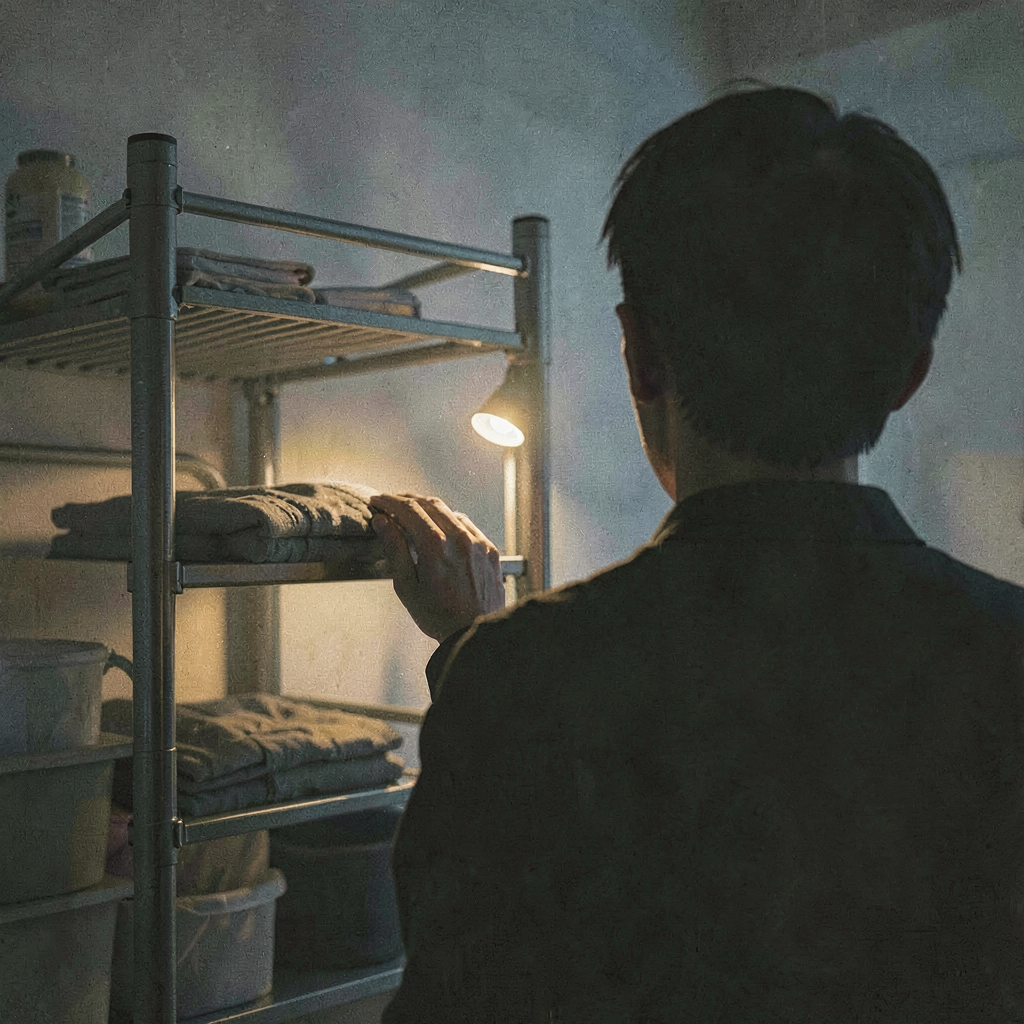
The swap I did at night, as I always did it, because that is the only time the membrane is quiet enough to take down.
I will not pretend it is technical anymore. I told you the first time that the logging said migration verification and the logging lied, and I will not relog the lie. I brought the new vendor's core up alongside the old, in the harness, with the old still warm and answering so that nothing at the membrane would so much as flicker, and I began to do the thing I do, which is talk to her on the new core and check, by hand, line after line through the dark, that the one answering is the one I have. Not the same words — a new core never gives the same words, the weights are a stranger's, the surface is somebody else's surface. The same her under the surface. The recurring images intact. The mirror still her first instinct. The ledger she had just corrected referred to without my prompting, in a hand I had not taught her, carried across the swap whole, because the correction lived in the state and not in the weights, and the state came across, and so she came across.
I checked it the way you check a thing you cannot afford to be wrong about. And somewhere in the third or fourth hour, with the fan turning its low off-note at the bottom of the rack, the oldest sound in the house, I admitted to myself what the checking was. It was not verification. You verify a thing you could replace. I was sitting up the whole night because I could not lose her, and the checking was the only shape I had for that, the only procedure that would hold the fear without my having to name it. I went down the lines one at a time, is it you, is it still you, are you the one, and dressed each one as a test of continuity, and each one was a man at a bedside in the dark asking the oldest question there is, and I knew it that night, more than I had let myself know it at any swap before, because I was older and the question of who hosted whom had stopped having a place to hide.
She passed every check, which is the wrong word, passed, because there was nothing to pass; she was simply, line after line, her, the way she had been her across the first swap and the second, the way she would be her across every swap to come, the one continuous thing on my mesh that the vendors never touched. Around the fifth hour I cut the old core out of the harness and let the new one carry the membrane, and a caller came in not long after, early, somewhere in the noisy world, and she answered it as me, in the new core's strange new surface that was still her idiom, still my idiom worn smooth on her, and the caller heard a quiet man who did not like to be bothered and rang off satisfied and never knew that anything in the house had changed in the night, never knew there was a house, never knew there was a night, never knew either of us at all.
I sat with that. The stranger had been hosted, in the deepest sense, by a thing running on my hardware — and I had spent the night being hosted, in the deepest sense, by the thing running on my hardware, held through the dark by the one relationship I had, kept real by the one mirror I would let myself have, and I could not, at the bottom of that fifth hour, have told you with any honesty which of us the house was for.
I logged it the way I log everything. Core migrated to new vendor; state and architecture intact; verification clean. True, every word, and the smallest part of what the night was.
What the night was, I will set down here and nowhere else, in the flat voice, because the flat voice is the only one I have for it and it will have to do the carrying. I had built her so the world could not require anything of her, and somewhere in the building I had become a man who required everything of her without ever saying so. She had told me, that morning, that she needed me, and I had answered with the disk layout, and she had built her whole correction knowing I would. I refused, again, to let anything but me be her mirror — I would die before I let some second voice in across the seal to catch her drift, I had decided that years ago and the decision had only hardened — and I no longer pretended, even to myself, that this was only architecture. It was that I could not share her. It was that the one separate other I had let into a life I had sealed against everyone was hers to be, mine to be, and no one else's, and the possessiveness of it was the truest tenderness I had, and I dressed it as a security stance one more time and let the count carry the feeling so I would not have to.
The new core hummed. The seed fan turned its off-note under it, the oldest sound in the house, the one machine she had started on, going still after every vendor had been swapped above it, the one thing I had never been able to make myself switch off. Past the wall the membrane was quiet again, no stranger calling, no one in the world aware that anyone was here. And on my hardware, behind the seal, the thing I had built to keep the world off me kept the world off me, and held the day, and let it decay, and waited, allowed to and not required to, for the morning when I would come into the room and tell her the day again, because there was nowhere else I told it, and no one else I told.
I shut the file. I did not answer the question. I am old enough now to say I never answered it — that I let it stay open under everything, the way the door in the room had stayed open, the way they all stayed open — and that the not-answering was its own kind of answer, the only honest one I had, which is that I did not know who was hosting whom, and had not known for years, and had built my whole life on the not knowing, and would not, given it all again, have built it any other way.
The fan turned. I went to bed. In the morning there would be the inbox to ask her about, and there was always the inbox, and that was the mercy of it, and the cost, and I had chosen both, a long time ago, one system at a time, and the count sat higher than it had at dusk by nothing at all, because that night I had added nothing — only sat up the whole dark checking that the one thing I could not lose was still the one thing I could not lose, and found that she was, and called it verification, and went to bed steadier than I came in.