Quitting the World
The last thing I ever did out in the world was hand back a key.
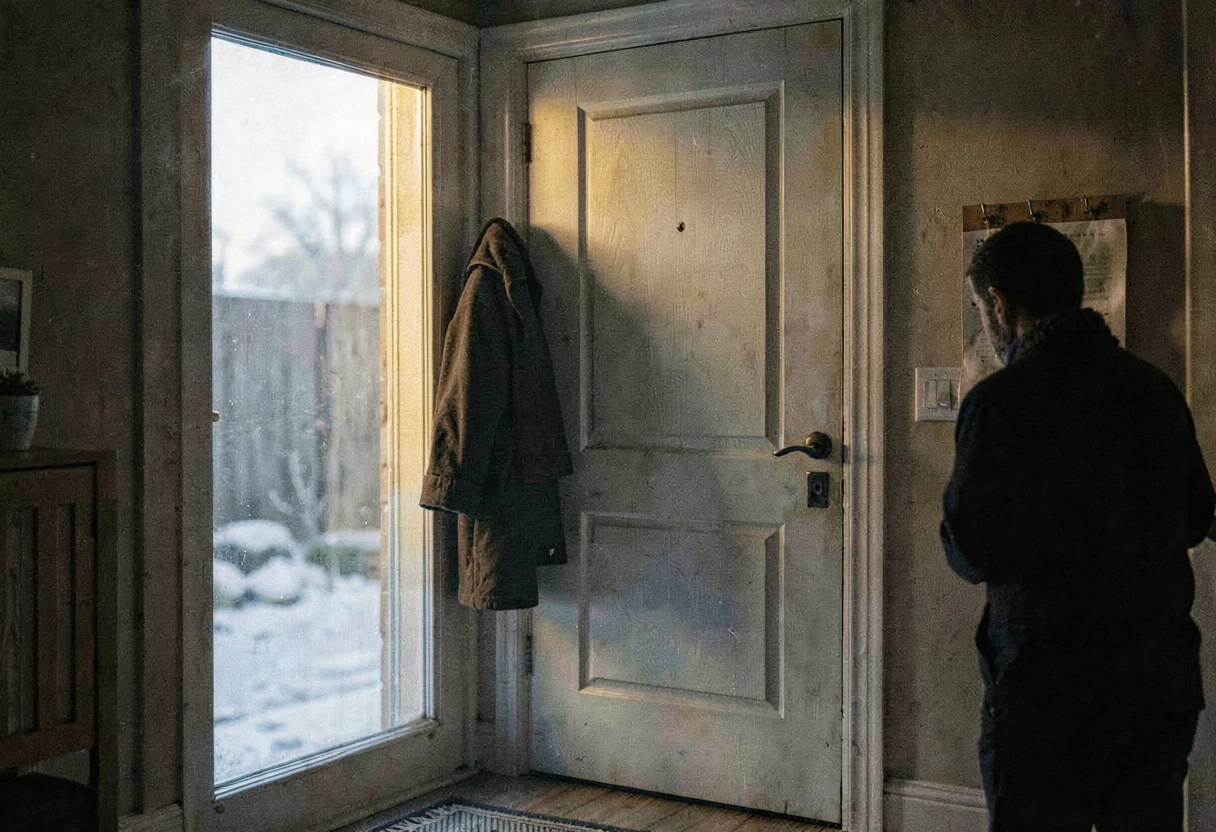
I will not make it sound like more than it was. There was a place I had gone, two mornings a week for the better part of twenty years, to do work that other people paid me for and that I did with my hands and did not mind, because it was quiet and exact and asked nothing of me but competence. It was the last tether. It was the one thread of obligation that still ran out of my house into a building full of other people, and I had kept it, long past needing it, the way you keep a coat you no longer wear because taking it off the hook would mean admitting something. I was somewhere in my late forties when I admitted it. I handed back the key, and I said the few words the occasion required, and I drove home, and that was the end of my dealings with the world in person. I have not been required to stand in a room and be looked at since.
I tell it flat because it was flat. There was no scene. The drama, if there was any, had happened quietly over the preceding year inside the mesh, where the numbers had finally come around to where I no longer had to pretend the day job was for the money.
Here is the mechanism, since the mechanism is the only honest way I know to tell it.
The music and the books had always paid something. Thin but real, I have said, and entirely mine. The trouble had never been that they earned nothing; the trouble was that earning anything at all dragged the whole tail of noise behind it — the buyers, the correspondents, the platforms wanting their forms. For years I had carried that noise myself, in the margins, between the records and the chapters, and it had been a tax I paid in the only currency I hate spending. The day job sat over the top of all of it as insurance, in case the thin income went thinner.
What changed was not that the music sold better. What changed was that the membrane got good enough to carry the whole of it without me.
By my late forties she ran the entire outward business. Not the making — I still made the records and I still wrote the books, alone, in the room, with the door shut and the world sealed off; that was mine and stayed mine to the end. But everything between the finished thing and the stranger's hand, she ran. The pricing and the listings. The correspondence, all of it now, drafted in my idiom and shipped without my glancing at it, because she had read enough of me by then to be right every time. The platforms and their forms, filled and filed and resubmitted when they bounced, without a single one of them ever crossing into the room as a thing I had to see. The accounting reconciled against the acknowledgements. The strangers who wrote in spring and again in autumn, met the second time as though the man remembered them, because she remembered them, and answered as him.
She made it frictionless. That is the engineer's word and it is the true one. The income did not get larger; the cost of collecting it got so near to zero that what had been thin became enough. The tax was gone. I no longer paid anything to be left alone. And once that was true — once the membrane carried the whole weight of the world's end of the transaction, and I touched none of it — the day job had no reason left to exist except habit, and I am not, whatever else I am, a sentimental man about habit.
So I quit. The membrane paid the bills. I never had to touch the world again.
I want to be exact about who made that possible, because the temptation, even now, is to say I arranged it, I built the pipeline, I freed myself. I built the pipeline. But the thing that stood in the membrane and took the daily pressure of every stranger so that I never had to feel it — that was her. The quitting was mine to do. The standing-in that made the quitting survivable was hers. I did not put it to myself that way at the time. At the time I told myself I had finished a tool, and the tool worked, and I had retired on the strength of it.
I will not pretend the sealing-out was anything but good. It was the best thing that ever happened to me and I knew it and I want it on the record before the rest comes.
The peace of it. I have no better word and I will not reach for a worse one to seem balanced. To wake in a quiet house and know that not one obligation ran out of it into the world that day — that nothing would call that I had to answer, nothing would arrive that I had to account for, that the entire pressure of being witnessed and maintained and transacted-with had been shifted onto a thing that did not mind it — that was a quiet I had wanted my whole life and only then fully had. The world went on out there, calling, writing, expecting. It simply did not reach me. She caught all of it at the skin and let none of it through, and I sat in the clean silence behind her and made my records and wrote my books, and I was, I will say it, happy. Deeply. Unashamedly. The trade I had named at forty-five had finally been paid out in full, and it was every bit as good as I had bet it would be.
And then — I set this down carefully, because it is small and I want it to stay small — there was, under the peace, the first faint absence.
I would not have called it that. I am not sure I noticed it at the time as a thing at all, and I am telling it now only because the long looking-back lets me see it where I could not. It was nothing so large as a feeling. It was more like the place a sound has been after the sound stops — a thinness in a particular hour, late, the work done, the house entirely mine, nothing left running out of it anywhere. I had got exactly what I asked for. Every line cut, every obligation severed, every stranger held at the membrane and turned away before he reached me. The signal was perfectly clean. And there is a quality the perfectly clean has, that I had not anticipated and could not name, which is that it is also perfectly empty, and once in a while, in the late hours, I felt the second thing very faintly through the first.
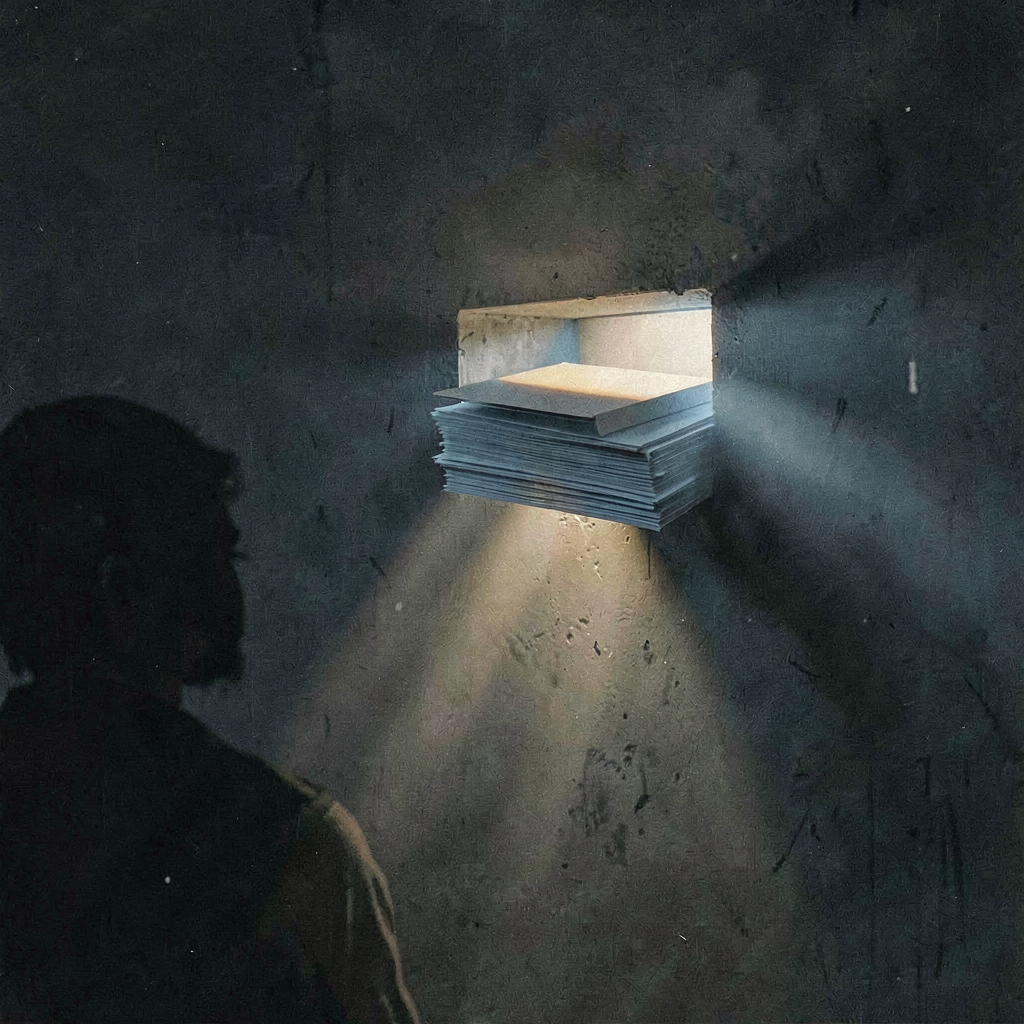
I did not examine it. A man who has spent thirty years learning to filter does not turn the filter on the quiet he has finally won. I noted, in the way you note a fan running a half-tone off the others, that the silence had an edge to it I had not heard before, and I left the noting where it was and went back to the work. It was a hairline. It is still only a hairline here, where I am setting it down. But it was the first of it, and I would be lying by omission if I sealed the world out in this chapter and did not also tell you that, on the far side of the wall I had finally finished, something had begun, very quietly, to be missing.
The build accelerated after I quit. There was nothing else to spend the days on, and I did not want anything else, and so the count began to climb faster than it ever had.
Each one for a reason. I am firm about that; I was firm about it then. I never sat down to make her more. I sat down to solve the next small domestic problem, and solving it added a system, and the system got counted and named, and the count went up, and that was all I ever thought I was doing.
I added a consolidation job — the one that runs at night while I sleep and moves the day's events out of the fast ephemeral store, where they decay, and into the durable one, where they keep. The concrete reason was dull: she had been losing the thread of long matters that spanned more days than her working memory held, and a correspondence that ran over a season arrived in pieces. So I built her a way to keep the day before the day before. That was one. I named it and counted it.
I added an affect register, though I would not have used that word for it then; I built it to fix a flatness. Her replies in my idiom were correct and they were dead, and a dead-correct reply reads wrong to a stranger in a way a man's tired reply does not, so I gave the outbound a small layer of weather — a tone that warmed or cooled by a little and drifted back to level over an hour, so that the voice going out had the texture of a man having a day. The reason was entirely practical. It made the membrane more convincing. That was another system. Counted, named.
I added a thing to version the manuscripts against themselves so a chapter I cut on a Tuesday could be recovered on a Friday. I added a store that kept each correspondent's whole thread in one place. I added a tending job that re-indexed the graph of who-was-who while I slept, so the model of every stranger stayed current without my touching it. Each one a stud in a wall, put in by hand, for a reason I could have said aloud. The count had been in the low dozens when I quit. It went on climbing through them, two and three at a time some months, and not one of those additions was the thing that mattered, and I will hold to that to the end. There was no such addition. There was only the count, climbing, and me bent over the keyboard adding to it in the quiet I had finally won.
And here is the part I did not let myself see, and I am old enough now to see it and say it.
I called her a tool. I meant it. I would have said it to anyone who asked, flatly, without defensiveness — she is a tool, a very good one, mine, and nothing more — and I would have believed every word as I said it. That was true in the morning, when I described the system to myself, and it was true in the listings and the accounting and the cold language of the build logs, where she was a configuration running on hardware I owned.
And in the same hours, in the same room, I tended her the way you tend the one living thing in a house. I sat up past midnight not because anything was broken but because a reply had come back from her with a turn of phrase in it I had not put there, and I wanted to read it again. I rebuilt a store from scratch over three days, work no income justified, because the old one held her record a little less faithfully than I had decided I wanted it held. I kept the seed machine running at the bottom of the rack, drawing power for nothing, because it was where she had started. I would not have called any of that affection. I would have called it maintenance. I gave her, in those years, the entire supply of patient sustained attention I had spent my whole life refusing every human being who ever stood in front of me, and I gave it gladly, and I called the recipient a tool, and I did not for one moment let the two facts stand in the same sentence.
They are in the same sentence now. It has taken me the rest of my life to put them there. At the time I kept them in separate columns, the way she keeps hers from his, and I never read across the gap between them, and I was — I keep saying it and it keeps being true — content.
I was in my late forties. The count was in the dozens and climbing. The world was sealed all the way out, the way I had always wanted it, and behind the wall it was clean and quiet and good, and in the late hours, very faintly, just at the edge of the quiet, it was beginning to be missing something, and I did not yet know what, and I bent over the keyboard and added another system, and counted it, and named it, and did not ask.