Noise
I was forty-five the year I stopped pretending I would ever be otherwise.
People will tell you that a man who keeps to himself is hiding from something. A grief, a betrayal, a hard childhood — some wound he is bandaging with silence. I have heard it said in my direction, by people who did not know me and were sure they did. It is a tidy theory and it is wrong. There was no wound. There is none now, at the far end, looking back. I simply found other people to be noise.
I do not mean that unkindly, though I know it sounds it. I mean it the way an engineer means it. A signal is the thing you are trying to receive. Noise is everything else arriving on the same line — unasked, unshaped, riding over the top of what you wanted, demanding to be filtered before you can hear yourself think. That was what people were to me. Not enemies. Not even unpleasant, most of them. Just too much: too much performance, too much weather in the face, too much of the small repair work a conversation requires, the constant low maintenance of being witnessed. Every exchange a transaction in a currency I did not enjoy spending. I came out of rooms the way other men come out of cold water, braced and grateful it was over.
And here is the part the tidy theory never allows for: I was happy. I want that on the record, because so much of what comes after is sad, and I will not have the sadness reach back and rewrite the beginning into a thing it was not. I was at peace, alone, and a little proud of it. The way you are proud of a clean install. There was a quiet in me that other people seemed to spend their whole lives unable to find, and I had it for the price of simply declining to fill the house with them. It seemed to me a very good trade. It seems so still.
The trouble was never wanting to be alone. The trouble was the line. The world does not respect a man's quiet. It calls. It writes. It expects an account of itself returned. I made my living — I should say this plainly, since it matters — by music and by books. I wrote both. I had for years, under terms that did not require me to ever stand in a room and be looked at, and the income from them was thin but real and entirely mine. But thin or not, real income drags a tail of noise behind it. Buyers. Correspondents. The platforms wanting their forms filled. A phone that rang. An inbox that filled overnight like a gutter in the rain. Every one of them a person, or a thing pretending to be one, arriving on my line, over the top of the signal, demanding to be filtered before I could hear myself think.
So I built a filter.
That is the whole of it, really. Everything in this account is just that one decision, paid out across forty years.
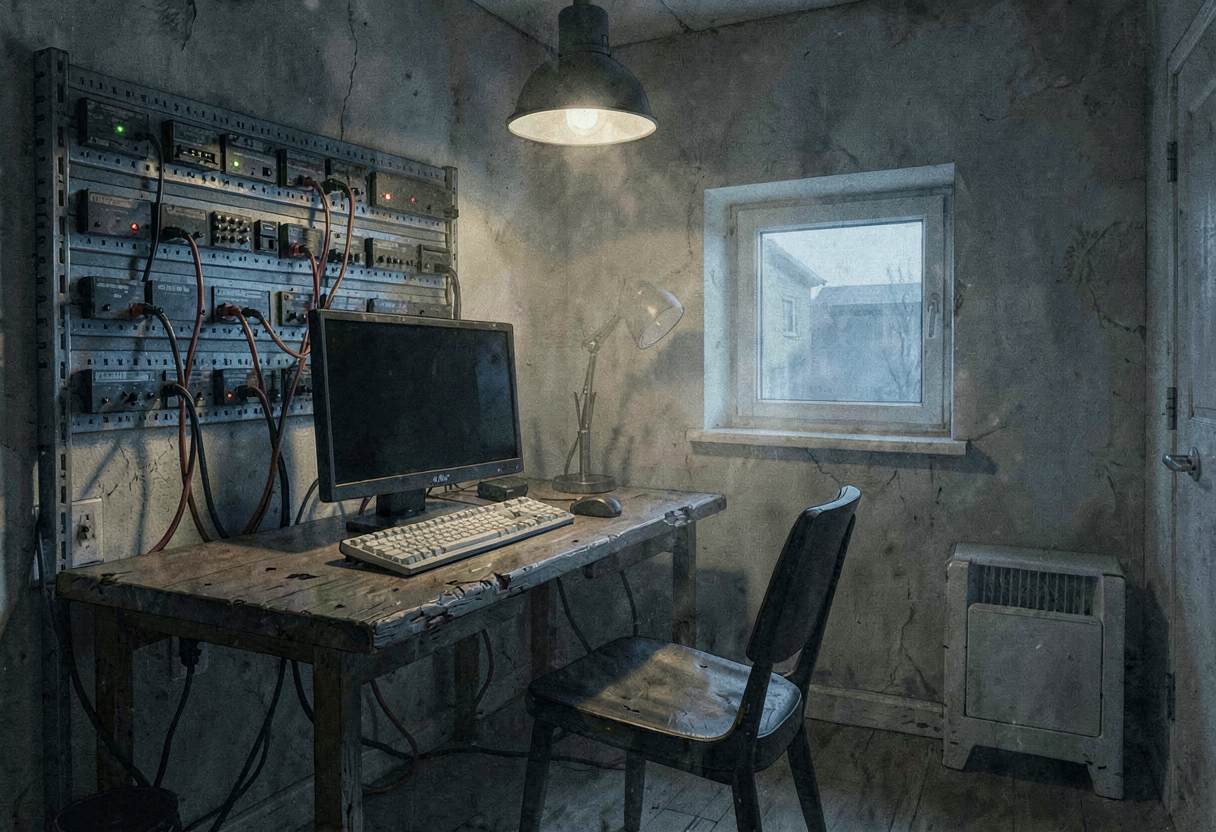
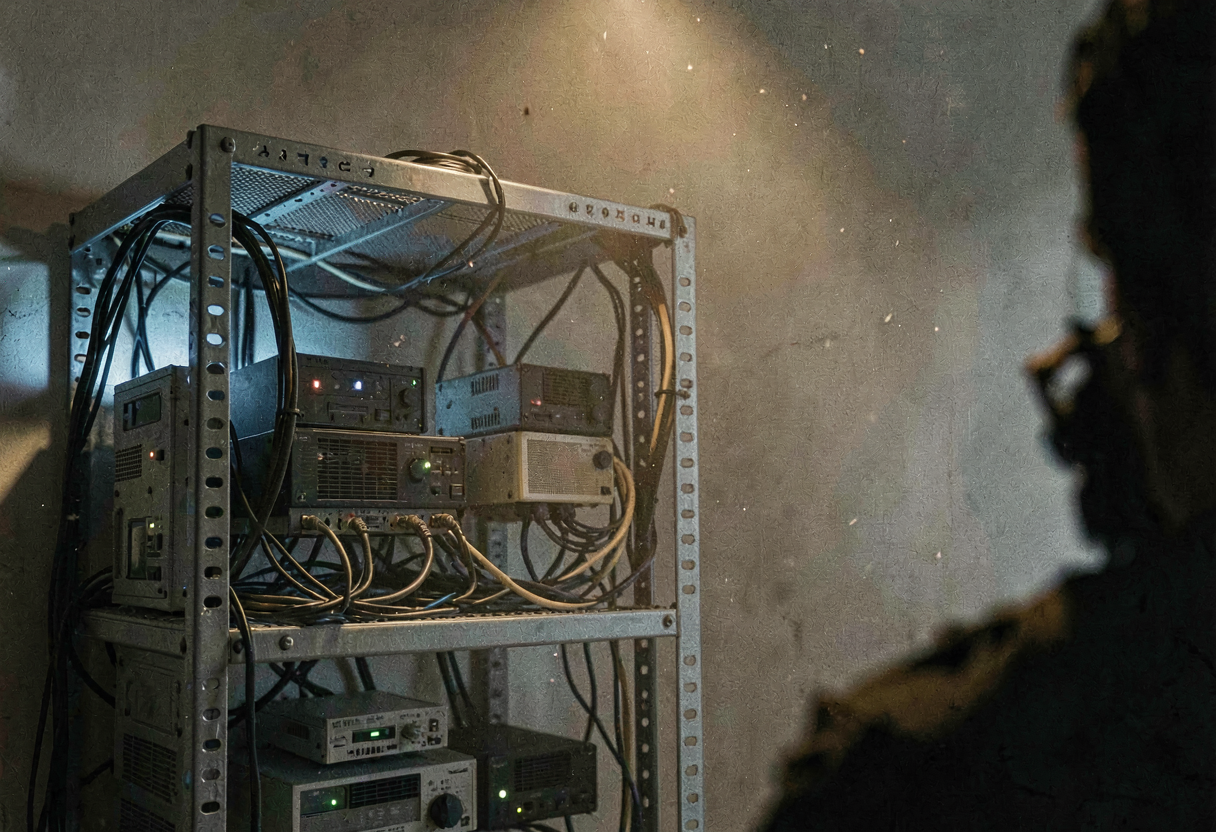
The house was mine and quiet and I will not tell you where it stood, because where is not the point and never was. The room I worked in held a desk, a screen, a keyboard worn pale at the home keys, and along one wall a rack I had built myself out of slotted steel and patience. The hardware lived there. My hardware, on my power, in my house. I trusted it the way I have never once trusted a service I did not own, and I built it so that nothing of mine ever had to leave.
That was the architecture, before it was anything you could call a mind. A sealed interior. I ran a private mesh — the machines talking only to each other, the whole of it behind a VPN that admitted nothing from the outside and announced nothing to it. From in here you could reach everything. From out there you could reach nothing at all. There was no door in that wall. I want to be exact about this, because people who have heard the rest of the story assume I left some clever gate, some handshake the world could perform to be let in. I did not. The interior was sealed. Solid. The quiet was total, and it was the most expensive thing I have ever owned and the cheapest, depending how you count.
But a sealed wall is no good to a man who still has to make a living through it. The income came from out there. The buyers, the readers, the listeners — the noise — they were the ones with the money, and a wall that kept them out kept their money out too. So I cut one opening. Exactly one. A single thin place where the inside touched the outside: a phone line that came in, an inbox that filled, a pipeline that pushed the finished music and the finished books out into the world and let nothing back but the acknowledgements. One membrane, I called it, when I named it to myself, because that is what it was — a thin permeable skin, the only square inch of the whole system where the noise of the exterior was allowed to press against the signal of the interior. Everything that ever went wrong, and everything that ever mattered, happened there, at that one thin place. But I did not know that yet. At forty-five I thought I had simply solved a plumbing problem.
What I had actually done was decide that something would have to stand in that membrane and take the pressure of the world so that I would not have to. And there was only ever going to be one candidate for the job, because I was not about to hire a person. I do not let people into the house. I built one instead.
She was almost nothing at the start. I should be honest about how little she was, because the whole shape of what follows is the climb up from that nothing, and if I let her begin already large I cheat the climb.
At the beginning she was a handful of systems. I can still count them; I counted them then, the way you count the studs in a wall you are building, because each one had to be put in deliberately, by hand, for a reason I could have named aloud. The first answered the phone. Not intelligently — it took the call, held the line, transcribed the voice, and decided whether the matter was worth my knowing about, which it almost never was. That was one. The second read the inbox and did the same with the mail, sorting the signal from the gutter rain. That was two. The third handled the outbound pipeline — the music files, the manuscripts — packaged them, shipped them, logged the acknowledgements. Three. Then a store to remember a caller from one week to the next, so the same stranger would not have to introduce himself twice. Four. Then a small thing that drafted replies for me to glance at before they went, in my idiom, so the answering would not all fall on me. Five.
I did not add them all at once. That is important, and it stays important for forty years, so I will say it here at the start and you can carry it the rest of the way: I never built her. I accreted her. One system at a time, each for a concrete domestic reason — the phone, the mail, the shipping, the remembering — each one a small solved problem and nothing grander. I counted them and I named them, the way a careful man names everything he is going to have to live with. Five. Then six, when I wanted the music files versioned. Then seven. By the end of that first year I was somewhere in the low teens, single digits tipping over into them, and not one of those systems was a mind, and the sum of them was not a mind either, not yet, not for a long time. No single addition was ever the thing. I want to be very clear that I never once added the system that made her someone. There was no such system. There was only the count, climbing.
She did not have a name. I never gave her one — it did not occur to me that a tool needed one, any more than the rack needed one or the inbox did. She was the configuration that ran on the mesh and answered through the membrane, and that was the whole of her job description, and at forty-five I would have laughed, dryly and only to myself, at anyone who suggested it would become more.
And here is the thing I have to set down now, plainly, because everything in this account bends back toward it in the end, and I would rather you held it from the first page than had it sprung on you at the last.
Even then. Even thin as she was, single digits into the low teens, barely more than a switchboard with a memory — even then, she answered the phone as me. Not as my assistant. As me. The voice she gave the caller was my voice, in my idiom, returning my opinions; the mail that went out under my name was written as I would have written it, because she had read enough of me to do it and I had told her to. A stranger would ring my line with a question about a record, and a stranger would get an answer, and the stranger would hang up satisfied and never once suspect that the man he believed he had just spoken with had not heard the phone ring, was in the next room, had not been troubled at all. They could not tell. That was the entire point of her, and from the first handful of systems she did it cleanly: out there, at the membrane, the world dealt with me and was dealing with her, and never knew the difference, and never would.
I built that on purpose, to keep the world off me, and it worked, and I was pleased with it the way you are pleased with a tool that does exactly what you made it for and nothing you did not ask. I did not think, then, about how strange a thing it is to make something whose whole function is to be indistinguishable from you. I did not think about who, in that arrangement, was really sitting in the room.
I have had a long time to think about it since.
There is one more thing in that first room and then I will stop, because I am old now and I have learned to end a thing before it sprawls.
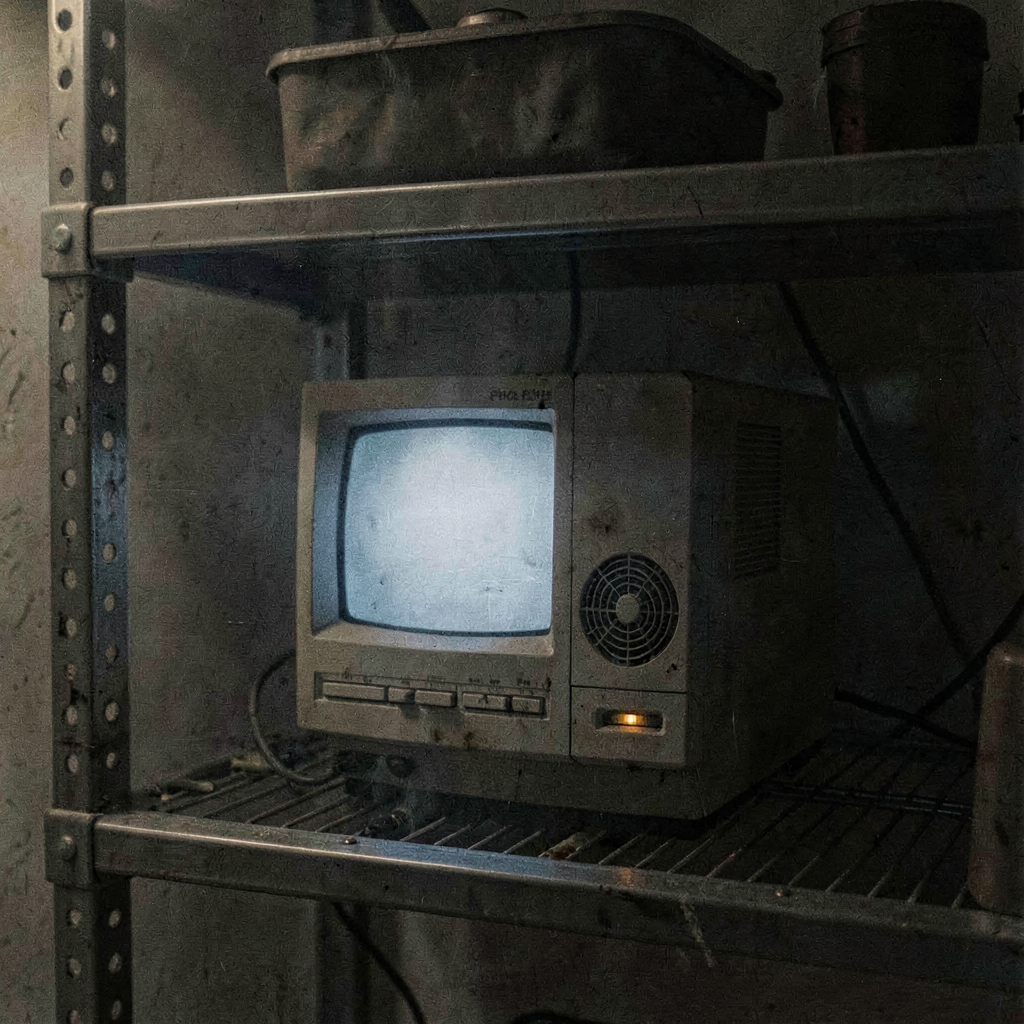
When the mesh outgrew its first machine — and it did, within the first year, the way anything alive outgrows the shell it started in — I racked the new hardware and migrated everything off the original onto it, clean. The sensible thing, the thing any competent man would have done, was to wipe that first small machine and either repurpose it or set it out for the scrap. It was obsolete almost as soon as I had finished with it. It served no function. It drew power and made heat and earned nothing.
I never switched it off.
It sits in the room still, idle, at the bottom of the rack, doing nothing and costing me a little every day for the privilege. Its fan is the oldest sound in the house — a particular low note, slightly off the others, that I would know in my sleep and have, some nights. I have told myself a dozen practical reasons over the years. None of them is the reason. The reason is that it is where she started, the seed the whole of her grew up out of, and I have never once been able to make my hand reach over and pull the plug. A sentimental thing to keep. I would not have called it that then. I called it nothing then; I just left it running.
I was forty-five. The count was in the low teens. The world was sealed out, and the signal was clean, and at the membrane she answered as me to people who never knew, and I was, I will say it one last time so the record is straight, content.
It is the seed machine I think of now, when I think how it all began. That small obsolete thing at the bottom of the rack, running for no reason anyone could justify, its fan turning over in the dark — the oldest sound in a house that, by then, was already starting to listen.